Part 61 · Airplane single-engine
Commercial Pilot Requirements and 250-Hour Roadmap
Short answer: The standard Part 61 path to a commercial pilot certificate with an airplane single-engine rating requires at least 250 hours total time—but the FAA also requires specific PIC, cross-country, instrument, training and solo-or-duties-of-PIC experience. Build the plan from a line-by-line logbook audit, not the total-hours number.
Aeronautical experience
The main Part 61 commercial airplane requirements
For an airplane single-engine rating, 14 CFR 61.129(a) requires at least 250 hours as a pilot. Within that total, the regulation specifies:
- 100 hours in powered aircraft, including at least 50 hours in airplanes.
- 100 hours of pilot-in-command time, including at least 50 hours in airplanes.
- 50 hours of cross-country PIC time, including at least 10 hours in airplanes.
- 20 hours of training in the commercial single-engine areas of operation, including the instrument, qualifying-airplane, day and night cross-country, and recent checkride-preparation items below.
- 10 hours of solo flight or duties-of-PIC time in a single-engine airplane with an authorized instructor aboard, covering the required areas and specific cross-country and night experience.
A pilot can have more than 250 total hours and still be missing a required category. A commercial plan should map every logbook entry to the current rule before new time is purchased.
Training details
Specific experience that must fit inside the total
Start with evidence
A commercial logbook audit prevents expensive mistakes
The audit should separate total time from every required subcategory and identify whether each special flight actually meets the distance, conditions, aircraft and instructor requirements.
- Your complete paper or electronic logbook and any simulator or training-device records
- Private Pilot Certificate, instrument-rating status and knowledge-test report if completed
- Aircraft types and equipment used for complex, turbine or TAA training
- Cross-country routes, landing points and straight-line distances
- Training endorsements and practical-test history
Some flight time may satisfy more than one category, but credit depends on how the operation was conducted and logged. The audit should identify uncertainties rather than silently count them.
Proficiency and experience
A practical roadmap from private pilot to commercial applicant
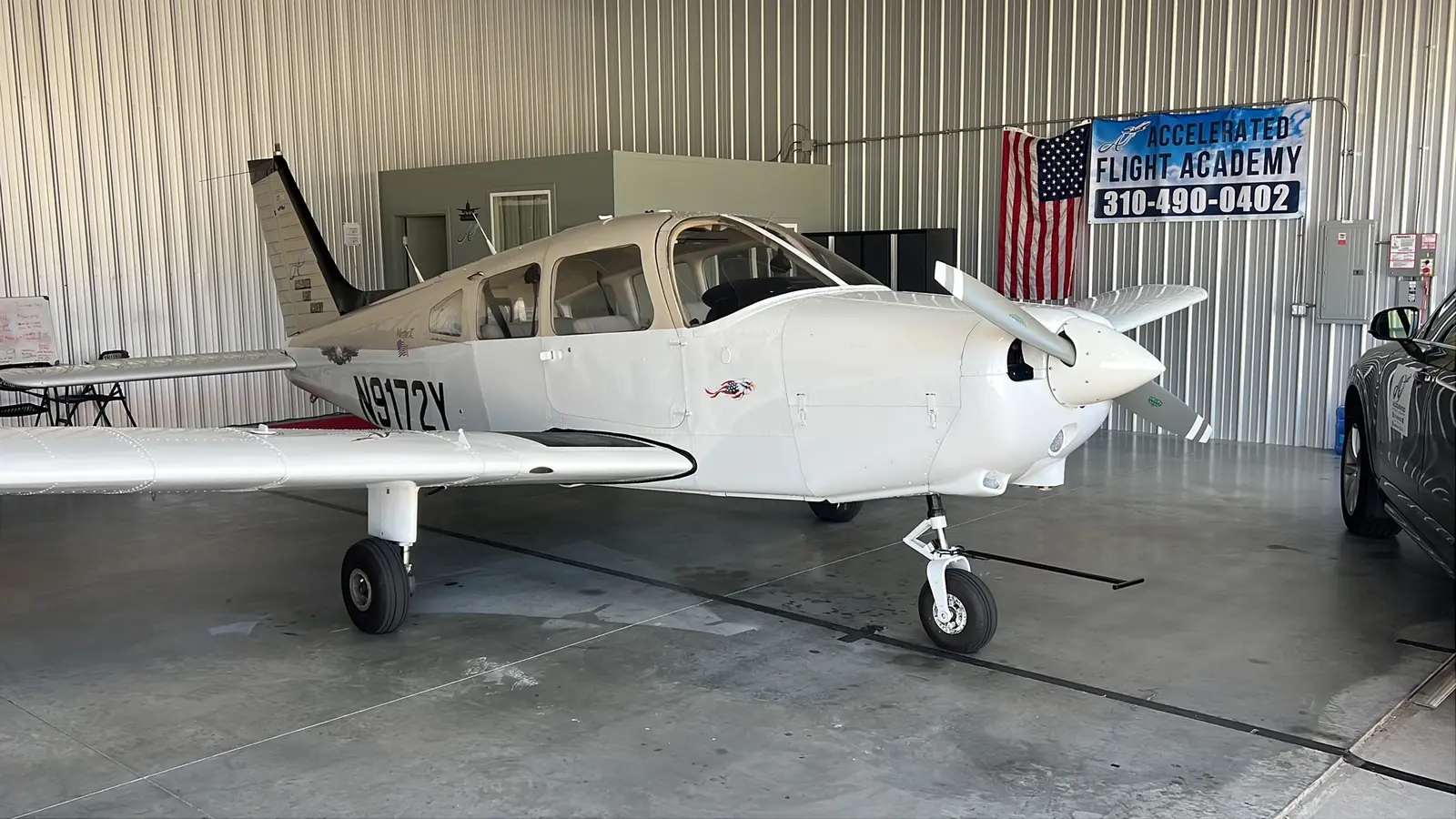
Accelerated Flight Academy operates one Piper Warrior II with one CFI/CFII. That supports direct instructor continuity, but any experience requiring a different qualifying aircraft must be identified and coordinated rather than promised as available in the Warrior.
Professional pathway
A commercial certificate is a milestone—not an airline guarantee
The commercial certificate permits specified compensated operations subject to regulations and operating limitations. It does not automatically authorize every kind of commercial flying, satisfy an employer's hiring minimums or qualify a pilot for an airline transport pilot certificate.
Career planning should identify the next required ratings and experience—commonly multi-engine training, flight-instructor certificates and structured time building—without presenting a guaranteed job or completion date.
FAA and federal sources
Verify the current standards directly
- 14 CFR 61.123: Commercial pilot eligibility
- 14 CFR 61.129: Aeronautical experience
- 14 CFR 61.133: Privileges and limitations
- FAA: Current Airman Certification Standards
- FAA: Commercial pilot certificate overview
This guide summarizes the standard Part 61 airplane single-engine path. It is not a substitute for the full regulations, current ACS, FAA guidance or an individual eligibility and logbook review.
Quick answers
Commercial pilot questions
How many hours are required for a Part 61 commercial pilot certificate?
For an airplane single-engine rating under the standard Part 61 path, 14 CFR 61.129(a) requires at least 250 hours of flight time as a pilot, including specific powered-aircraft, airplane, pilot-in-command, cross-country, instrument, training and solo-or-duties-of-PIC experience. The total alone is not enough; every required category must be documented.
Can I start commercial training before reaching 250 hours?
Yes. Commercial maneuver training and knowledge preparation can begin before 250 hours. A good plan uses remaining experience-building flights to develop precision, judgment and professional habits while preserving the specific flights and recent training required by the regulation.
Do I need an instrument rating before the commercial checkride?
An instrument rating is not stated as a universal prerequisite to take every commercial-airplane practical test, but without an airplane instrument rating the commercial certificate carries significant limitations on carrying passengers for hire and on flights beyond 50 nautical miles. Most professional paths complete the instrument rating first. Review 14 CFR 61.133 and your circumstances with a CFI.
Does a Piper Warrior satisfy the complex or technically advanced airplane requirement?
A specific aircraft only counts if it meets the applicable regulatory definition. The commercial single-engine rule requires 10 hours of training in a complex airplane, turbine-powered airplane, technically advanced airplane, or a permitted combination. Accelerated Flight Academy's Piper Warrior II should not be assumed to satisfy that requirement; arrange qualifying-aircraft training only after a logbook and aircraft-equipment review.
Does 250 hours qualify me for an airline job?
No. The FAA's commercial certificate minimum and airline hiring or ATP eligibility are different milestones. Airlines and other employers generally require additional certificates, ratings, experience and company-specific qualifications.