Logbook and gap review
Map existing experience against current aeronautical requirements before paying for unnecessary time.
 Accelerated Flight AcademyVan Nuys Airport · Los AngelesCall (310) 490-0402
Commercial training · Van Nuys
Raise your flying to a professional standard through precise maneuvers, stronger judgment and a training plan built around your existing experience.
The objective
Training roadmap
Map existing experience against current aeronautical requirements before paying for unnecessary time.
Develop precision, energy management and mastery through the maneuvers required by the commercial ACS.
Strengthen planning, systems knowledge, judgment, regulations and professional cockpit discipline.
Close knowledge and proficiency gaps, rehearse realistic scenarios and demonstrate consistent standards.
Eligibility and experience
FAA minimums establish eligibility for a practical test. Completion time and total cost still depend on proficiency, preparation, weather and lesson frequency.
Training rate
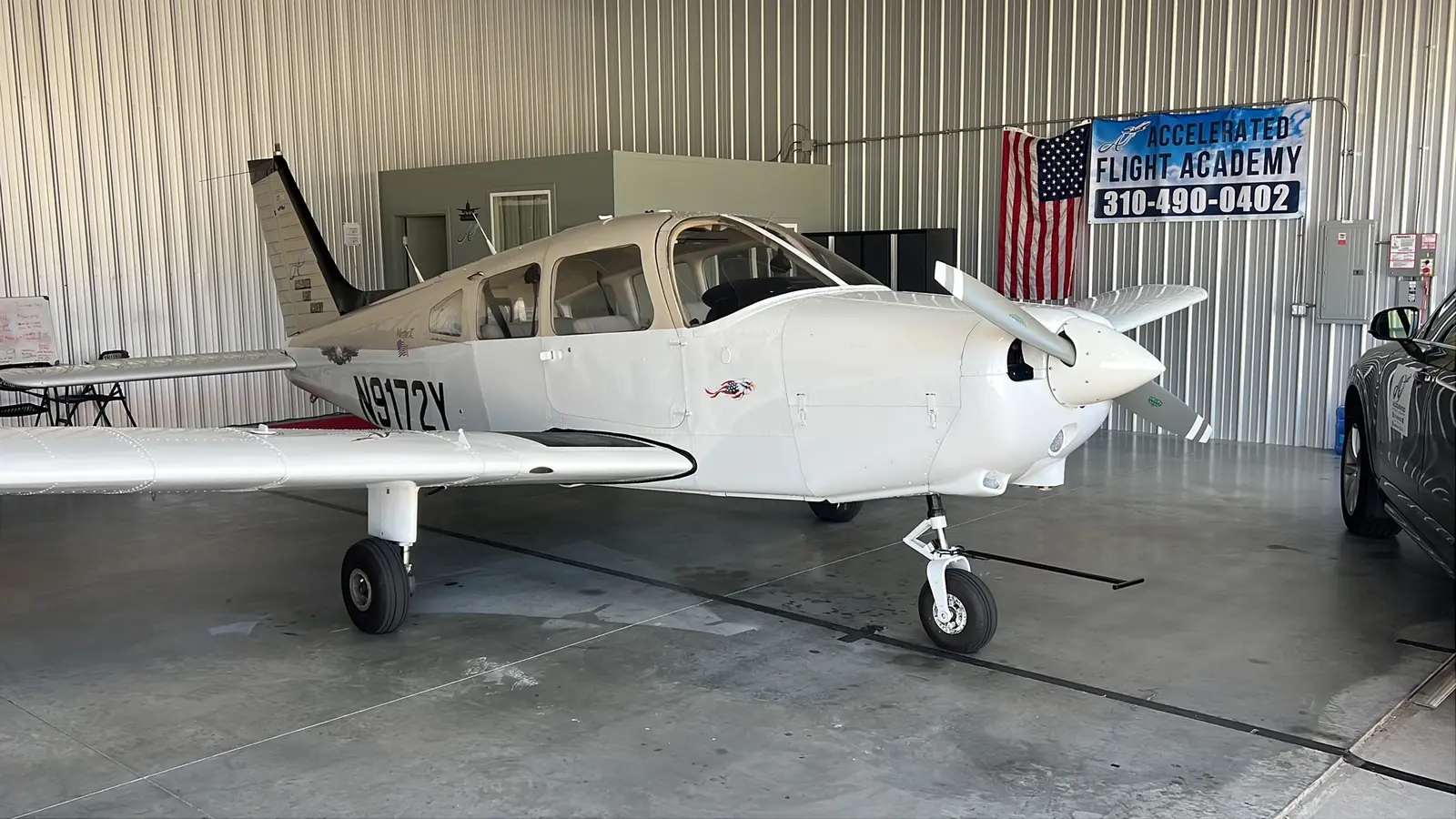
Typical combined Piper Warrior II and instructor rate. Exact rate, lesson scope and any ground-instruction time are confirmed before training. Total program cost depends on your starting point, proficiency, preparation, weather and lesson frequency.
Program questions
No. The commercial certificate permits certain compensated flying, but airlines and other employers require additional certificates, ratings and substantially more experience. It is an important professional milestone—not the end of the career path.
Yes. A tailored plan can combine experience building with commercial-skill development, but you must satisfy all applicable aeronautical-experience requirements before the practical test.
Commercial requirements contain several specific categories of time. Reviewing your records prevents assumptions and allows training to focus on genuine experience and proficiency gaps.
Planning guides
Talk with your instructor
No call center and no enrollment pressure. Get a direct answer from the CFI/CFII who will train with you.