Part 61 · Instrument—Airplane
Instrument Rating Requirements and Training Plan
Short answer: A Part 61 instrument-airplane applicant generally needs 50 hours of cross-country PIC time and 40 hours of actual or simulated instrument time, including 15 hours with an instrument-airplane instructor. You must also complete the required IFR cross-country, ground preparation, knowledge test, endorsements and practical test.
Eligibility and experience
The Part 61 instrument-airplane checklist
14 CFR 61.65 contains the complete requirements. For a typical airplane applicant, the major items include:
- Hold at least a current Private Pilot Certificate—or apply concurrently—with the appropriate aircraft rating.
- Receive and log the required ground training from an authorized instructor or complete an applicable home-study course.
- Receive the required knowledge-test endorsement and pass the FAA knowledge test.
- Log 50 hours of cross-country time as pilot in command, including at least 10 hours in an airplane.
- Log 40 hours of actual or simulated instrument time in the required areas of operation.
- Receive at least 15 hours of instrument training from an authorized instructor who holds an instrument-airplane rating.
- Complete three hours of instrument flight training with an authorized instructor in an appropriate airplane within two calendar months before the practical test.
- Receive the practical-test endorsement and pass the applicable practical test.
The instructor must also determine that you meet the knowledge, risk-management and flight-proficiency standards in the current Instrument Rating—Airplane ACS.
A specific required flight
The 250-nautical-mile IFR cross-country
The instrument-airplane experience must include cross-country procedure training on one flight with an authorized instructor that is:
This flight is an aeronautical-experience requirement. It should be planned when the student can manage clearances, en route workload, approach briefings, missed-approach decisions and diversions—not merely as a mileage exercise.
Start with evidence
Review the logbook before estimating cost or completion time
A meaningful training plan begins with the actual logbook—not a verbal estimate. Existing cross-country PIC, actual instrument, simulated instrument and CFII training entries should be separated and checked for compliance.
- Your complete paper or electronic logbook
- Private-pilot certificate and medical information
- Knowledge-test report, if already completed
- Training-device records and instructor endorsements
- Recent flight experience and aircraft-familiarity history
Credit involving a simulator, flight training device or aviation training device depends on the applicable rule, device approval and how the training was conducted and logged. Do not purchase a package based on unverified device credit.
Proficiency-based roadmap
A practical instrument training sequence
Calendar planning
What determines how long the rating takes?
There is no single honest timeline without reviewing your experience. A pilot who already has the required cross-country PIC time and substantial valid instrument experience has a different plan from a recently certificated private pilot.
| Factor | Why it changes the plan |
|---|---|
| Existing logbook credit | Determines which aeronautical-experience requirements remain. |
| Weekly frequency | Consistent training reduces procedural relearning and supports scan discipline. |
| Ground preparation | IFR regulations, weather, charts and procedures require study outside the aircraft. |
| Weather and maintenance | Some lessons need actual operations; others can be accomplished safely in simulated conditions, but aircraft availability still matters. |
| Knowledge test and examiner | Delayed testing or practical-test availability can extend the calendar after flight proficiency is reached. |
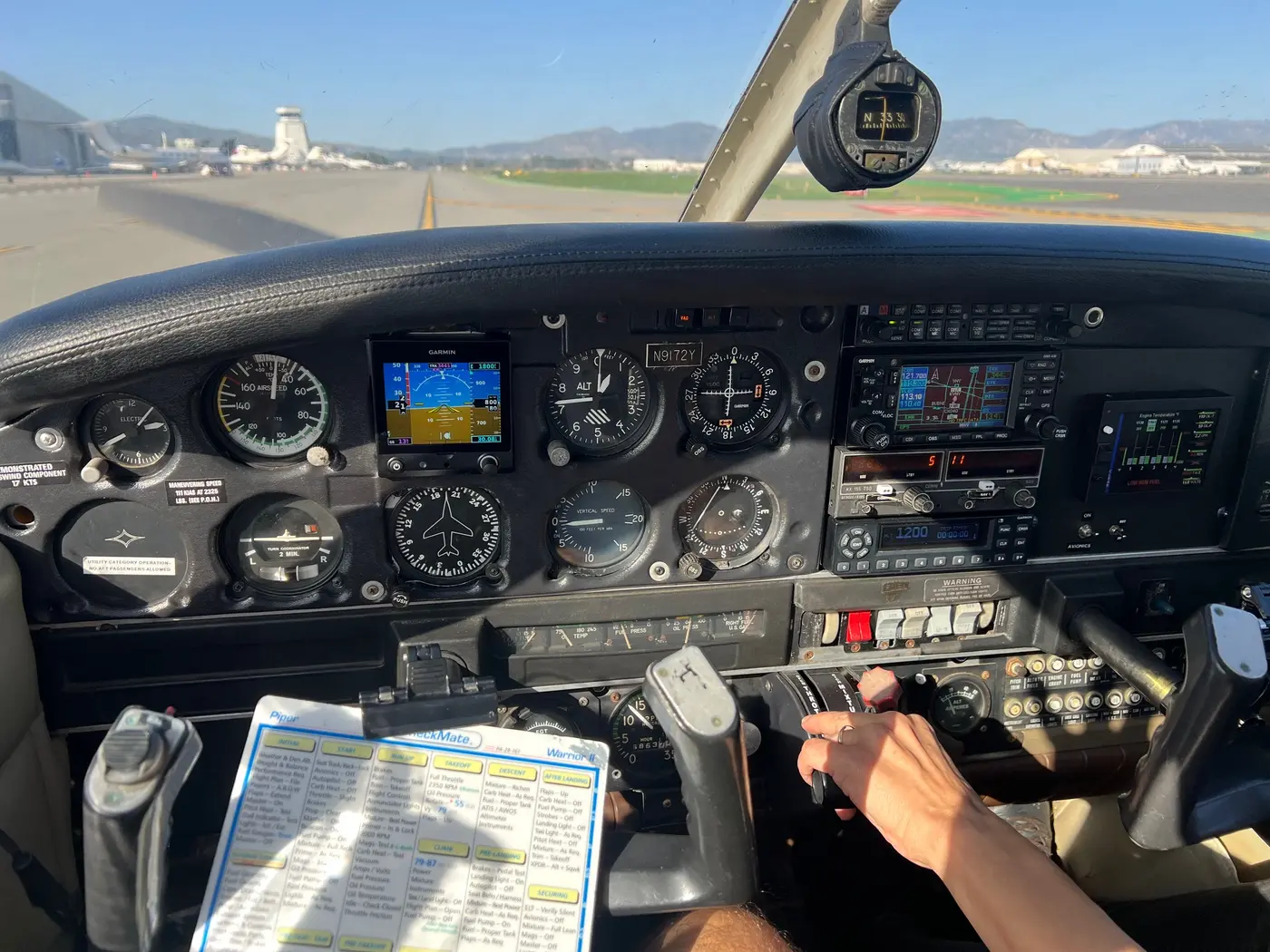
At Accelerated Flight Academy, one CFII and one Piper Warrior II provide direct continuity but finite capacity. We confirm actual weekly availability and the aircraft’s maintenance outlook before proposing a schedule.
After the checkride
An instrument rating is not permanent instrument currency
The rating remains on the pilot certificate, but acting as pilot in command under IFR or in weather below VFR minimums requires recent instrument experience under 14 CFR 61.57. For airplanes, the regulation generally requires six instrument approaches, holding procedures and intercepting and tracking courses within the preceding six calendar months.
If the recent-experience requirements have not been met for more than the additional period allowed by the rule, an instrument proficiency check is required to reestablish currency. Legal currency is also not the same as real-world proficiency; personal minimums and recurrent training should match the intended operation.
FAA and federal sources
Verify the standards directly
- 14 CFR 61.65: Instrument rating requirements
- 14 CFR 61.57: Instrument recent experience and proficiency checks
- FAA: Current Airman Certification Standards
- FAA AC 61-65K: Certification guidance and endorsements
This guide summarizes common Part 61 instrument-airplane requirements; it is not a substitute for the full regulations or an individual logbook review. Rules, device approvals and eligibility circumstances can change.
Quick answers
Instrument-rating questions
What are the main FAA requirements for an instrument-airplane rating?
Under Part 61, an applicant generally needs the appropriate private pilot certificate, ground training or home study, instructor endorsements, a passed knowledge test, 50 hours of cross-country pilot-in-command time, 40 hours of actual or simulated instrument time including 15 hours with an instrument-airplane instructor, the required IFR cross-country, and a passed practical test. Review 14 CFR 61.65 for the complete rule.
Do I need 40 hours with a CFII?
No. The Part 61 instrument-airplane requirement is 40 hours of actual or simulated instrument time, of which at least 15 hours must be received from an authorized instructor who holds an instrument-airplane rating. Other requirements and proficiency standards still apply.
Can existing simulated instrument time count?
Properly logged prior time may count when it meets the applicable regulations. Device credit depends on the device, approval, instructor involvement and how the training was conducted and logged. Have a CFII review each entry before building a remaining-hours estimate.
What is the required instrument cross-country flight?
For the Part 61 instrument-airplane rating, the training must include an IFR cross-country in an airplane with an authorized instructor, on a filed flight plan, covering 250 nautical miles along airways or ATC-directed routing, with an instrument approach at each airport and three different kinds of approaches using navigation systems.
How long does instrument-rating training take?
There is no universal calendar. A pilot who already meets much of the cross-country and instrument-time requirement may focus on proficiency and checkride preparation, while another pilot may need substantial time building. Consistent weekly training, ground preparation, weather, maintenance and examiner availability affect completion.
Does earning an instrument rating keep me instrument current?
No. The rating and instrument currency are different. To act as pilot in command under IFR or below VFR minimums, a pilot must meet the recent-experience requirements of 14 CFR 61.57 or complete an instrument proficiency check when required.