The academy training aircraft
Piper Warrior II for Flight Training
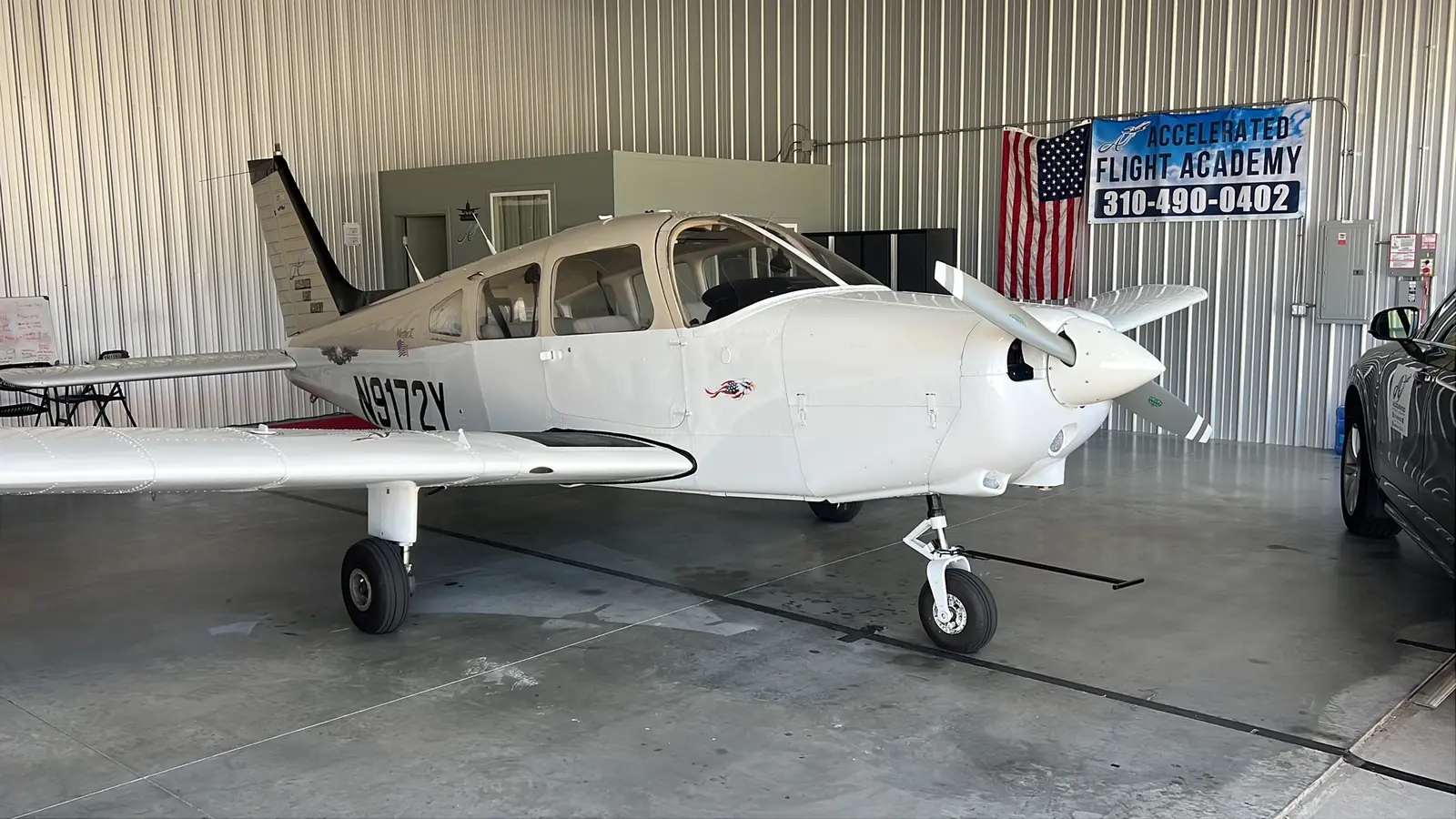
Short answer: Accelerated Flight Academy trains in N9172Y, a 1985 Piper PA-28-161 Warrior II based at Van Nuys Airport. Students use the same aircraft to build repeatable cockpit flows, checklist habits, aircraft-control skills, navigation procedures and—when appropriately equipped and approved for the flight—instrument skills.
Verified aircraft facts
Meet N9172Y
The FAA aircraft registry identifies N9172Y as a 1985 Piper PA-28-161, serial number 28-8616034. It is listed as a fixed-wing, single-engine airplane with a reciprocating engine. Accelerated Flight Academy uses this Warrior II for one-on-one training at Van Nuys Airport.
The FAA registry itself warns that registry information should not be used to determine airworthiness. Every flight depends on current aircraft records, required inspections, equipment status, weather, loading and the instructor or pilot's preflight determination.
Skill development
What students learn in the airplane
The FAA's Private Pilot flight-proficiency rule covers broad areas of operation rather than prescribing one trainer model. In the Warrior II, lessons are organized around the student's current certificate, experience and proficiency.
The Airplane Flying Handbook is the FAA's primary flying-technique reference. The applicable Airman Certification Standards—not a marketing page—define the knowledge, risk-management and skill standards used for a practical test.
One airplane, one instructor
Why consistency can help learning
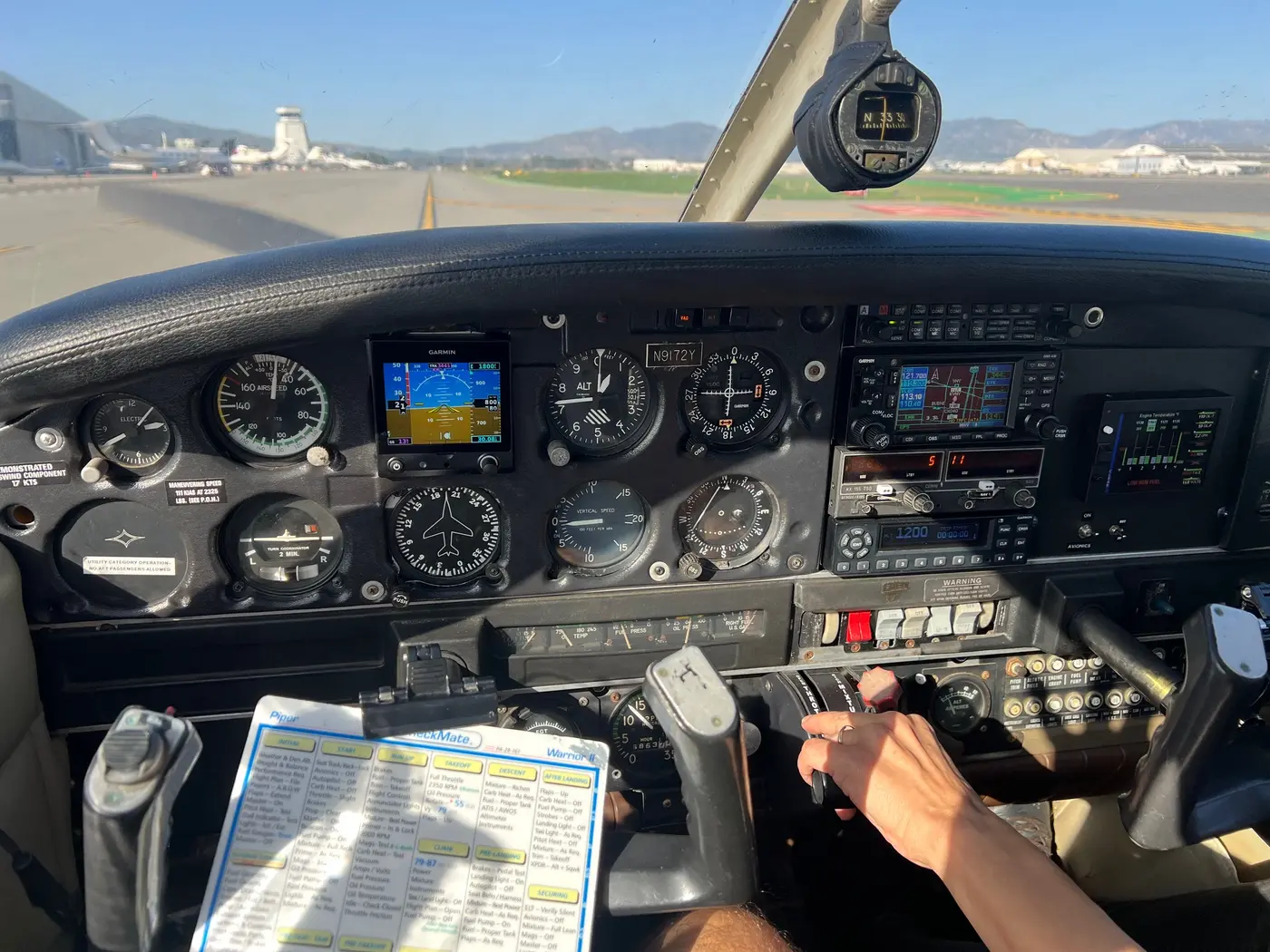
Repeated training in the same cockpit lets a student practice the same physical flows, sight pictures and checklist sequence. That does not eliminate the need to learn aircraft differences later. It can, however, reduce avoidable transition time during a focused course of training.
- Controls, switches and instruments are in familiar locations.
- Preflight and cockpit flows can be practiced between lessons.
- The instructor can track recurring technique and procedural errors over time.
- Each lesson can begin from the previous debrief instead of a new-aircraft orientation.
Continuity is a training approach, not a safety ranking or a promise of faster completion. Progress still depends on preparation, lesson frequency, weather, maintenance availability and individual proficiency.
From briefing to debrief
A typical Warrior II training lesson
- Set the objective
Choose a small number of measurable tasks based on the syllabus, prior debrief and current conditions.
- Plan and preflight
Review weather and airport information, calculate performance and loading as required, inspect the aircraft and organize the cockpit.
- Brief high-workload moments
Discuss taxi, runway, departure, maneuver setup, emergency priorities and who will handle each radio call.
- Fly the lesson
Practice the planned skills with instructor demonstration, guided repetition and increasing student responsibility.
- Debrief with an action
Record what met the standard, what needs another repetition and what study or chair-flying will prepare the next lesson.
Evaluate the fit
What to check before committing
- Can you sit comfortably, reach the controls and see the necessary references?
- Does the instructor explain the cockpit and lesson objective clearly?
- Are aircraft availability, maintenance downtime and scheduling expectations discussed honestly?
- Do you understand the combined aircraft-and-instructor rate and what is billed?
- Does the training plan match your certificate, experience and weekly availability?
- Would a discovery flight lesson help you evaluate the aircraft and instruction before enrolling?
Primary sources
Verify aircraft and training standards directly
- FAA Aircraft Registry: N9172Y
- FAA Dynamic Regulatory System: Piper Type Certificate Data Sheet 2A13
- FAA Airplane Flying Handbook
- 14 CFR § 61.107: Private Pilot flight proficiency
- FAA Private Pilot for Airplane Airman Certification Standards
This page describes the academy's aircraft and training approach. It is not an operating manual, maintenance record, aircraft status report or substitute for the approved Pilot's Operating Handbook and current required flight information.
Quick answers
Piper Warrior II training questions
Which Piper Warrior II does Accelerated Flight Academy use?
Training is conducted in N9172Y, a 1985 Piper PA-28-161 Warrior II based at Van Nuys Airport. The FAA registry identifies it as a fixed-wing, single-engine airplane with a reciprocating engine.
Can I learn to fly in a Piper Warrior II with no experience?
Yes. A new student can begin with a discovery lesson or Private Pilot training. Your instructor introduces the cockpit, checklists, controls and radio work in manageable steps.
What do students practice in the Warrior II?
Lesson content depends on the certificate or rating. It can include preflight procedures, basic aircraft control, slow flight, stalls, takeoffs and landings, ground-reference maneuvers, navigation, emergency procedures and instrument work.
Can the same airplane be used for instrument training?
Accelerated Flight Academy uses N9172Y for instrument training. The exact equipment, inspections and operating status required for a planned flight are confirmed before that flight; a website description never substitutes for the aircraft records or preflight review.
Does one aircraft fit every student and training goal?
No aircraft or instructor is the right fit for everyone. A discovery lesson lets you evaluate the seating, cockpit, teaching style and Van Nuys training environment before committing to a longer plan.